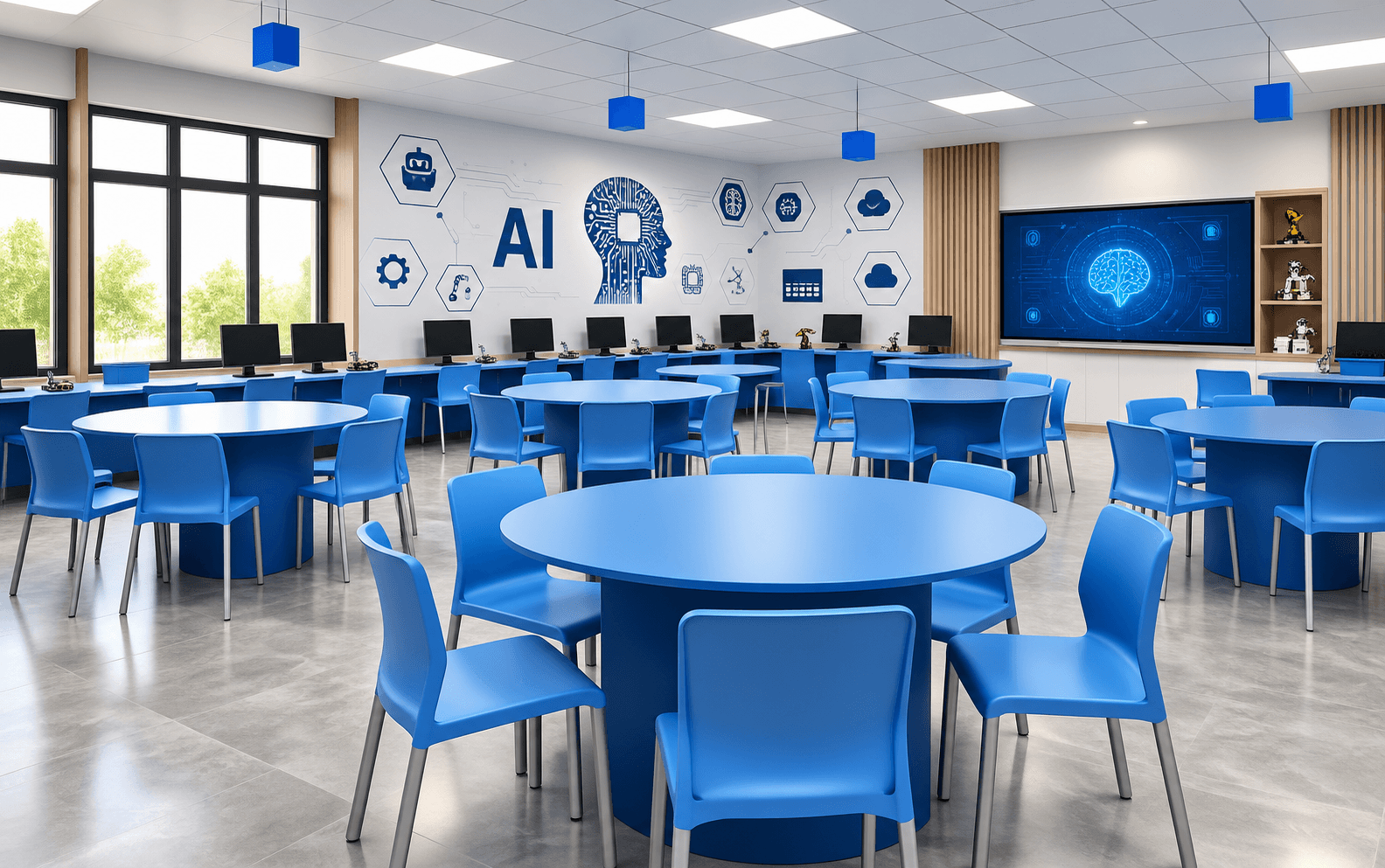
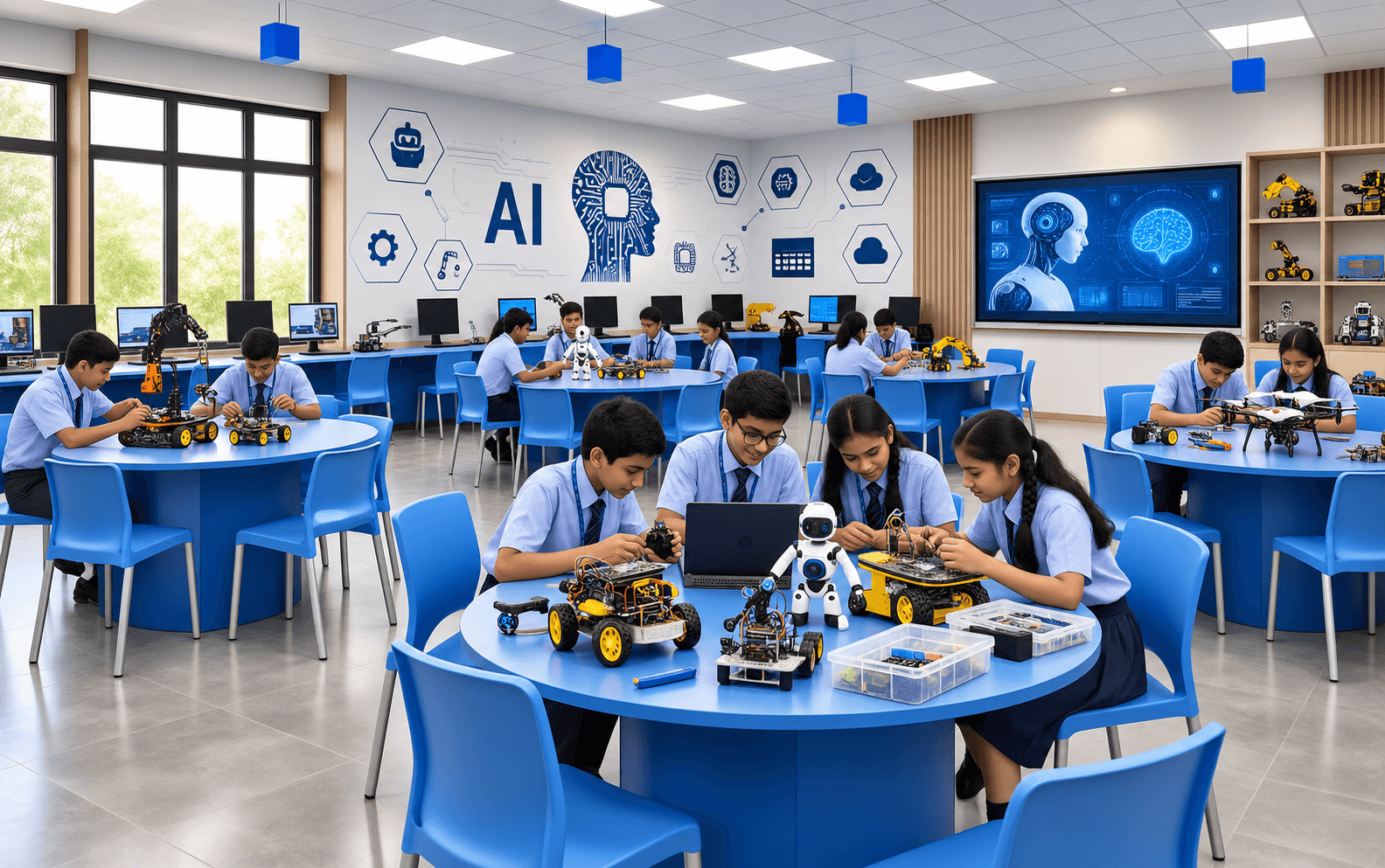
An AI & Robotics Lab is a dedicated space in a school where students learn technology concepts by actually building and programming things, rather than only reading about them in a textbook. Instead of a single subject, it typically brings together electronics, robotics, coding and introductory artificial intelligence concepts in one hands-on environment.
What Does the Lab Actually Contain?
Depending on a school’s program and grade levels, a lab can include robotics kits, sensors, microcontrollers, basic electronics components and computers or tablets for programming. The exact equipment mix varies by school — there is no single fixed list every lab must have.
How Do Students Use It?
Students typically move through guided activities — understanding a mechanism or circuit, assembling it, then programming it to behave in a specific way. Over time, this progresses from simple guided exercises toward more open-ended building and problem-solving.
How Does It Fit Into the Curriculum?
A lab works best when it is connected to the school’s own curriculum and timetable rather than treated as an occasional extra activity. This is where structured curriculum development and ongoing teacher training make a practical difference.
Getting Started
Schools considering a lab for the first time usually start by clarifying their learning goals and grade levels, then plan the physical space and equipment around those goals — covered in more detail in our guide on planning an AI & Robotics Lab.
Botixbo’s AI & Robotics Lab solution brings equipment, curriculum and training together as one implementation for schools exploring this path.