
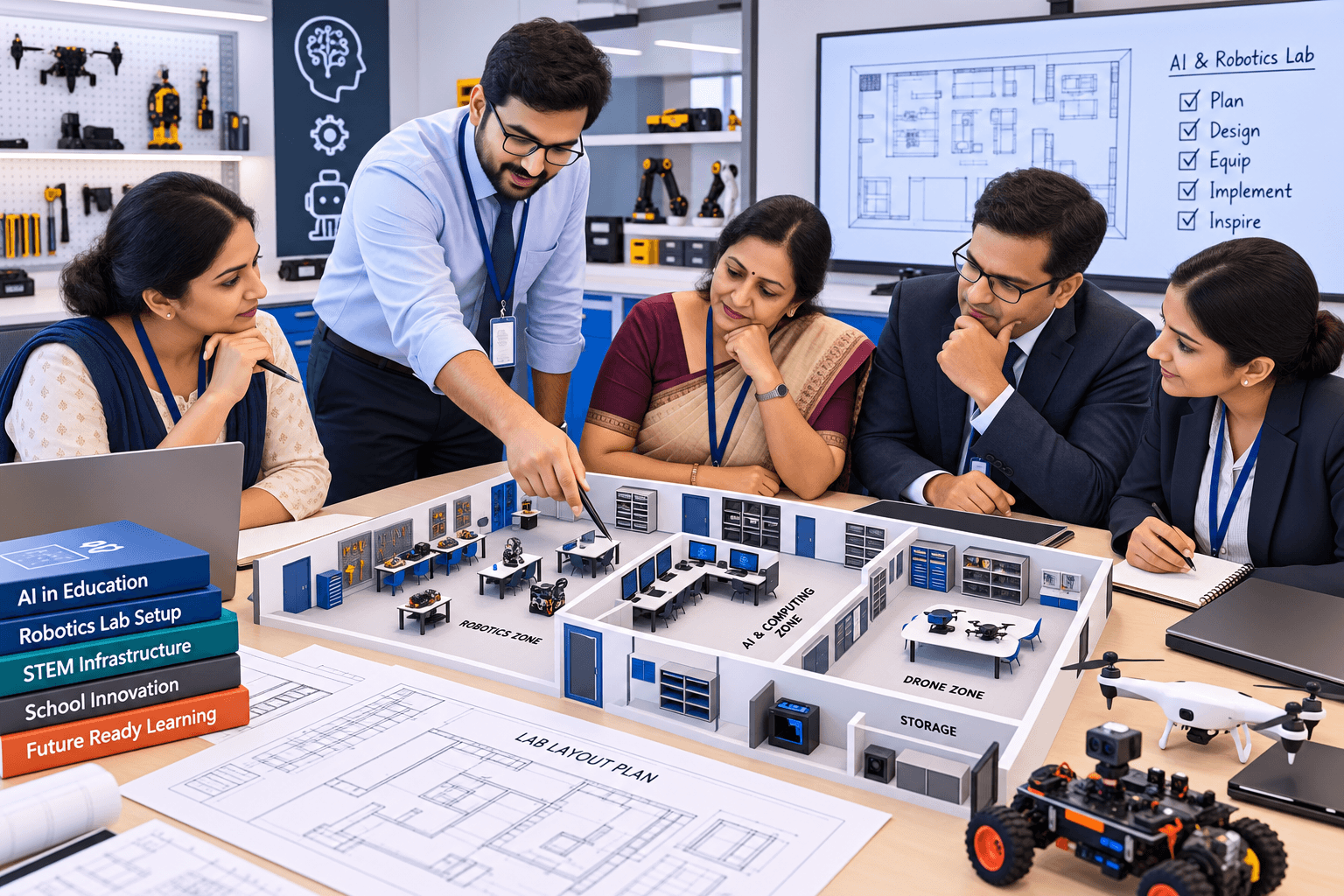
There is no single universal formula for an AI & Robotics Lab — the right setup depends on a school’s space, student age groups and learning goals. That said, a few planning areas come up in almost every school’s process.
Space Planning
A lab needs enough workspace for small-group building activities, safe storage for equipment, and reliable power and seating arrangements that support both instruction and hands-on work.
Age Groups and Learning Goals
Younger students often start with simple mechanisms and guided building, while older students can take on more independent robotics and programming work. Being clear about which grade levels the lab serves shapes almost every other decision.
Equipment Categories
Rather than a fixed shopping list, it helps to think in categories: robotics kits and mechanisms, sensors and microcontrollers, basic electronics components, and computers or tablets for programming. The specific brands and quantities depend on budget and program scope.
Teacher Readiness
A lab is only as effective as the teachers running it. Teacher training — not just an equipment handover — is what allows a school to keep the lab running confidently after the initial setup.
Curriculum
Curriculum development connects lab time to what students are actually expected to learn at each grade level, rather than leaving lab sessions disconnected from the rest of the school year.
Safety and Ongoing Support
Basic safety practices around tools, electronics and shared equipment should be part of the initial setup, and labs benefit from a plan for ongoing maintenance and support rather than being left to degrade after the first year.
Bringing It Together
Botixbo’s AI & Robotics Lab solution and Robotics Lab Setup service are built around this same planning approach — understanding a school’s requirements first, then planning equipment, curriculum and training together.