
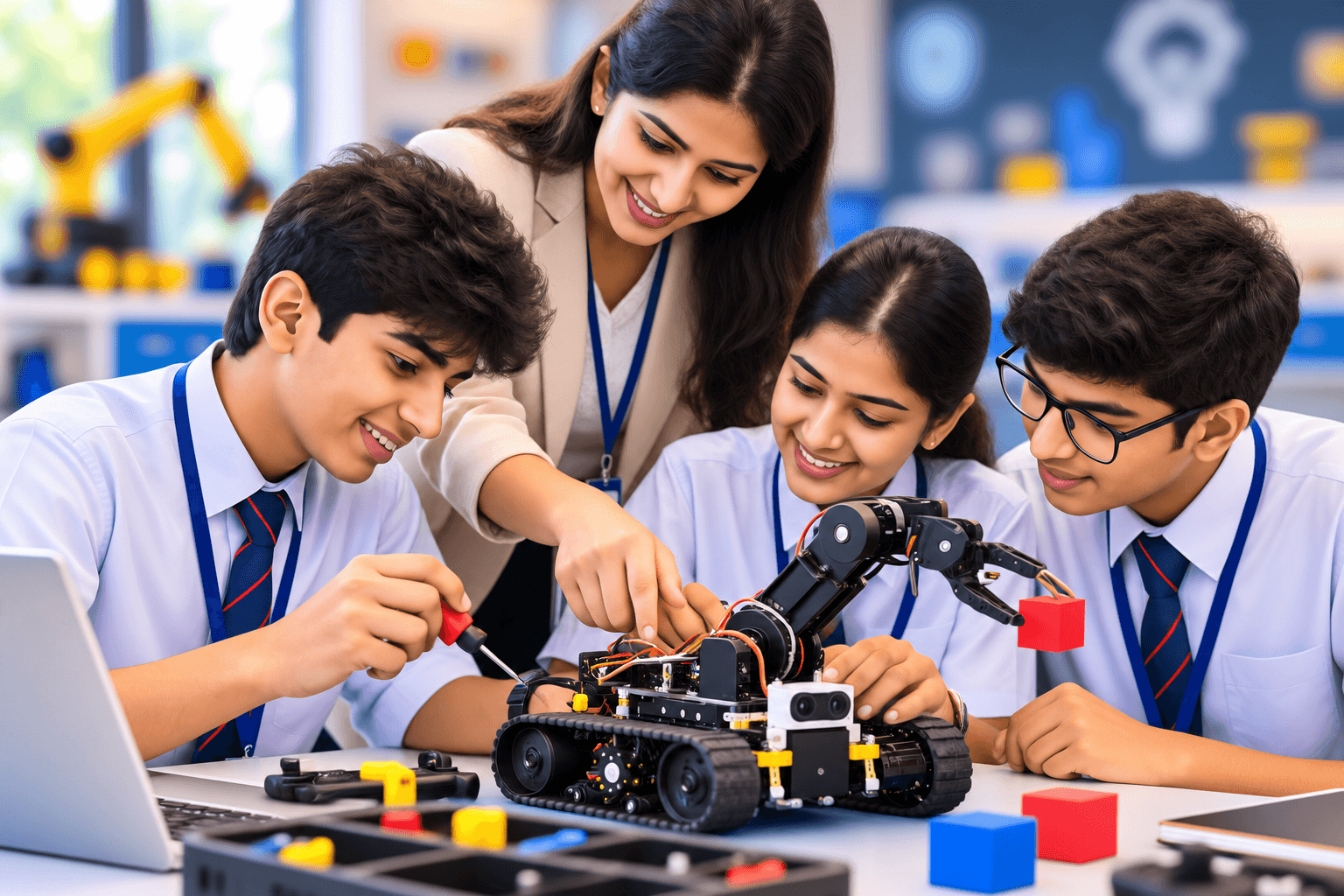
Science, technology, engineering and math concepts are often taught through diagrams and formulas alone. Hands-on STEM education takes the same concepts and lets students build, test and observe them directly.
Learning by Doing
When a student builds a simple circuit or structure themselves, they encounter the concept directly — what works, what doesn’t, and why — rather than only reading a description of it.
Experimentation Over Memorization
Hands-on activities naturally invite trial and error. A student who tries an approach, sees it fail, and adjusts is engaging with the underlying concept more actively than one memorizing a formula for a test.
Problem-Solving in Practice
Building something that has to actually work — a small machine, a circuit, a structure — forces students to break a problem into steps and troubleshoot along the way, which is a practical form of problem-solving practice.
Curiosity and Engagement
Physical, hands-on activities tend to hold students’ attention differently than passive instruction, often leading to more questions and follow-up exploration on their own.
Bringing This Into the Classroom
Schools looking to build this kind of hands-on STEM environment can explore Botixbo’s STEM program or the broader Solutions available for schools.