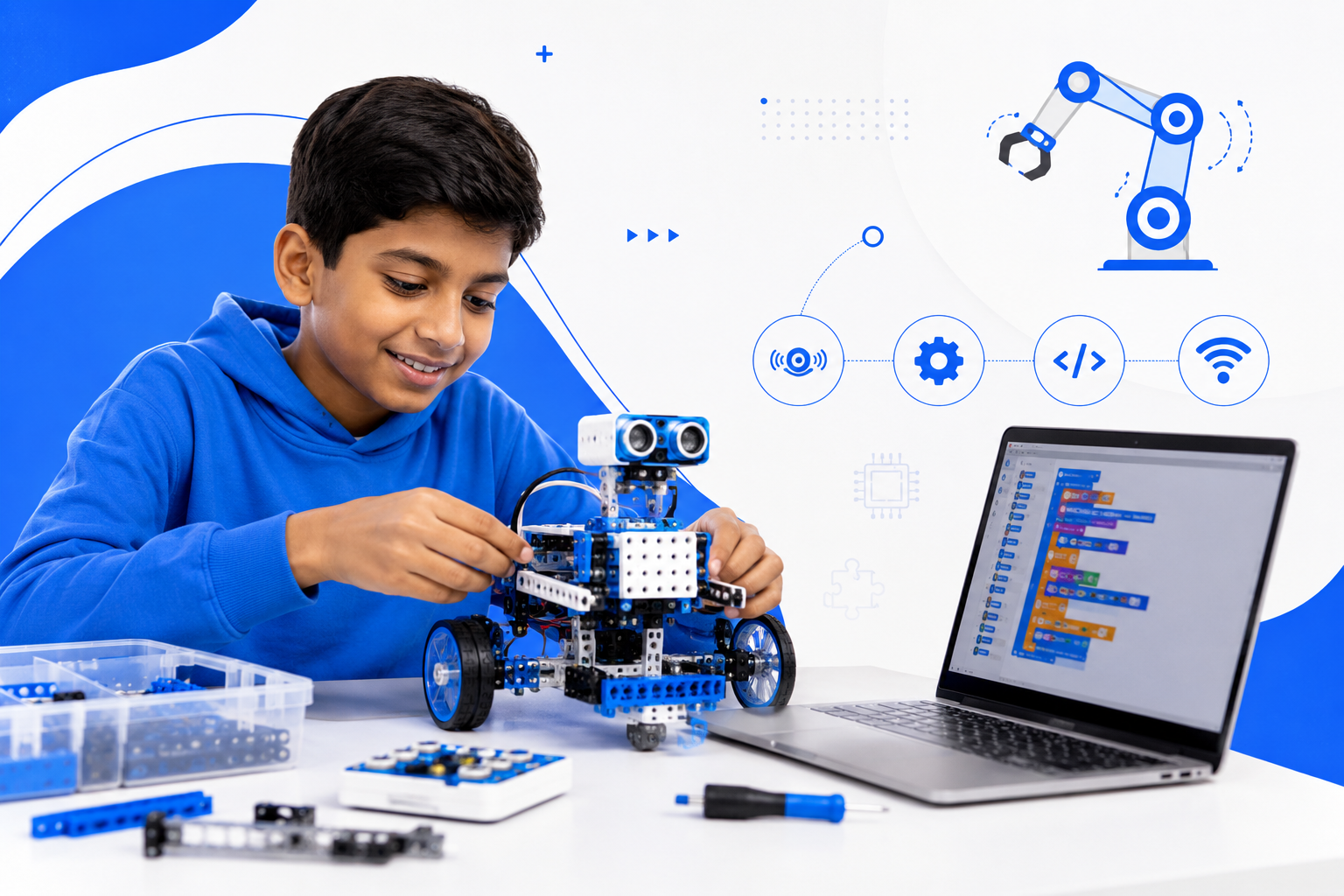

Robotics education is often framed around the equipment — sensors, motors, circuits — but the skills students build along the way tend to be just as valuable as the technical knowledge itself.
Problem-Solving
Building a working robot rarely goes right on the first attempt. Students learn to identify what isn’t working, form a hypothesis, and test a fix — a practical problem-solving loop that applies well beyond robotics.
Logical Thinking
Programming a robot’s behavior requires breaking a task into clear, ordered steps — a form of structured, logical thinking that transfers to coding, math and everyday reasoning.
Creativity
Open-ended building challenges give students room to design their own approach rather than follow one fixed method, encouraging creative problem-solving alongside technical skill.
Collaboration
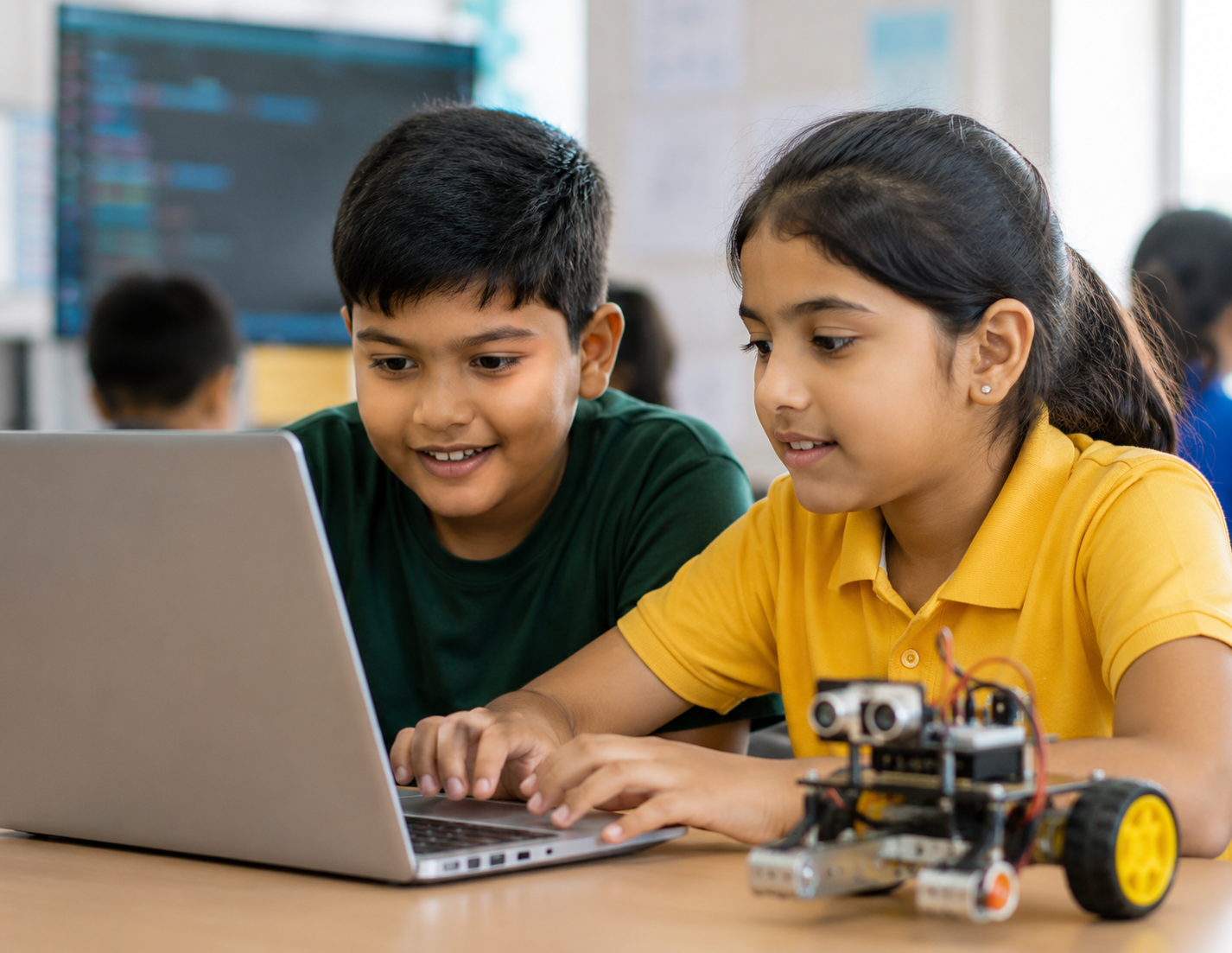
Many robotics activities are done in pairs or small teams, giving students practice dividing tasks, communicating ideas and working through disagreements about how to solve a problem.
Technical Confidence and Experimentation
Repeated hands-on experience with electronics, sensors and code builds a comfort with experimentation — students become more willing to try, fail and iterate rather than avoid the unfamiliar.
These are practical, transferable skills rather than a guarantee of a specific career outcome — robotics education is one way to build them through direct, engaging practice. Explore how these skills are developed in Botixbo’s Robotics, Artificial Intelligence, Coding and IoT programs.