Choosing the right lab for your school
Schools arrive at this decision from very different starting points. Some are setting up their first dedicated technology space; others already run a lab and want to extend it into AI, astronomy or immersive learning. The eight solutions below are not a ladder to climb in order — they are different environments suited to different goals, age groups and room sizes.
The questions worth answering before comparing equipment lists are usually simpler than they appear: which year groups will use the space most, how many students need to work at once, how much room is genuinely available, and who on your staff will run sessions week to week.
How the solutions differ
| Solution | Best suited to | Typical emphasis |
|---|
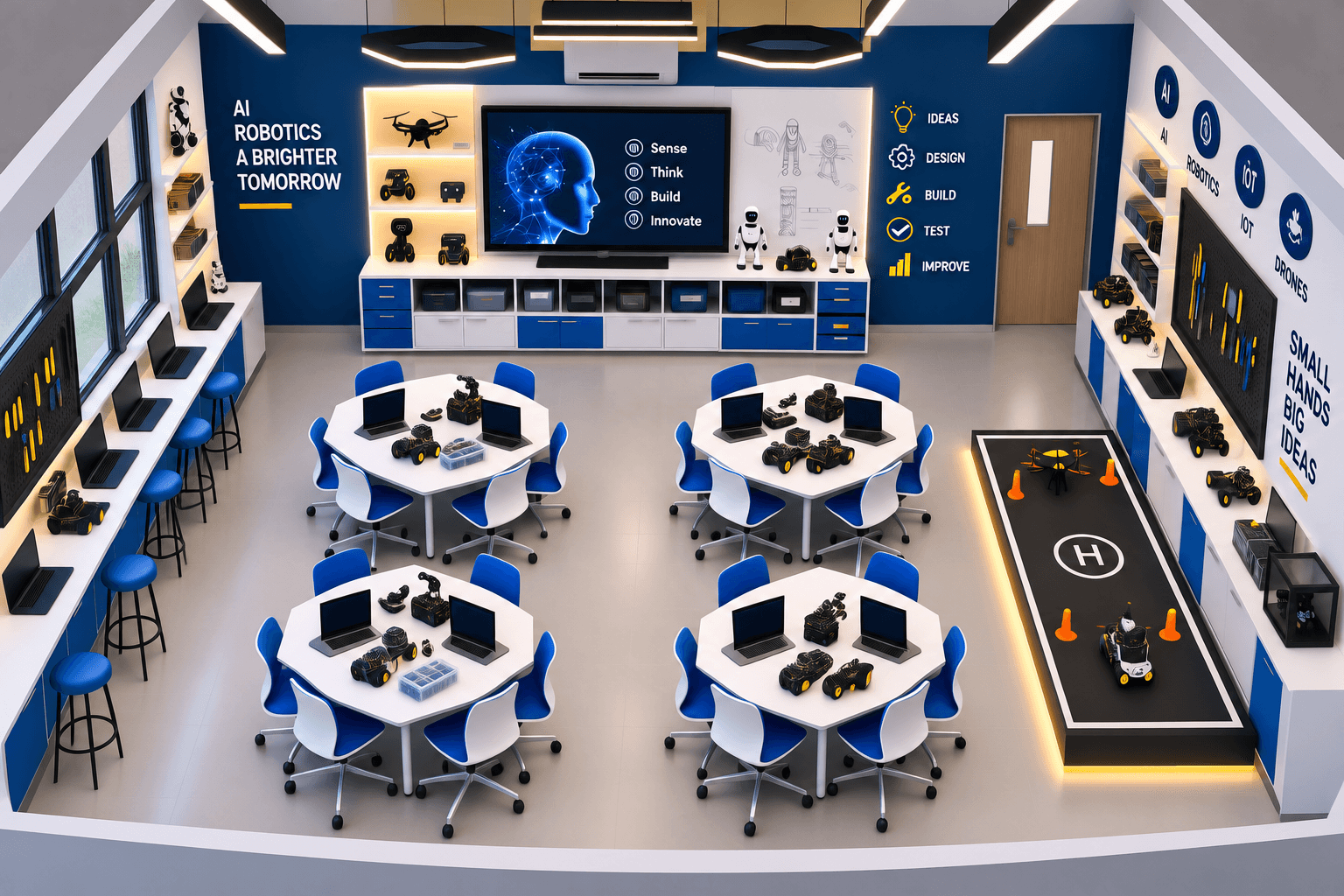
| AI & Robotics Lab | Schools wanting one comprehensive technology environment | Electronics, coding, robotics and applied AI in a single space |
| STEM Lab | Broad science and engineering activity across many classes | Hands-on experiments spanning science, technology, engineering and maths |
| Innovation Lab | Project and design-led teaching | Prototyping, making and open-ended student projects |
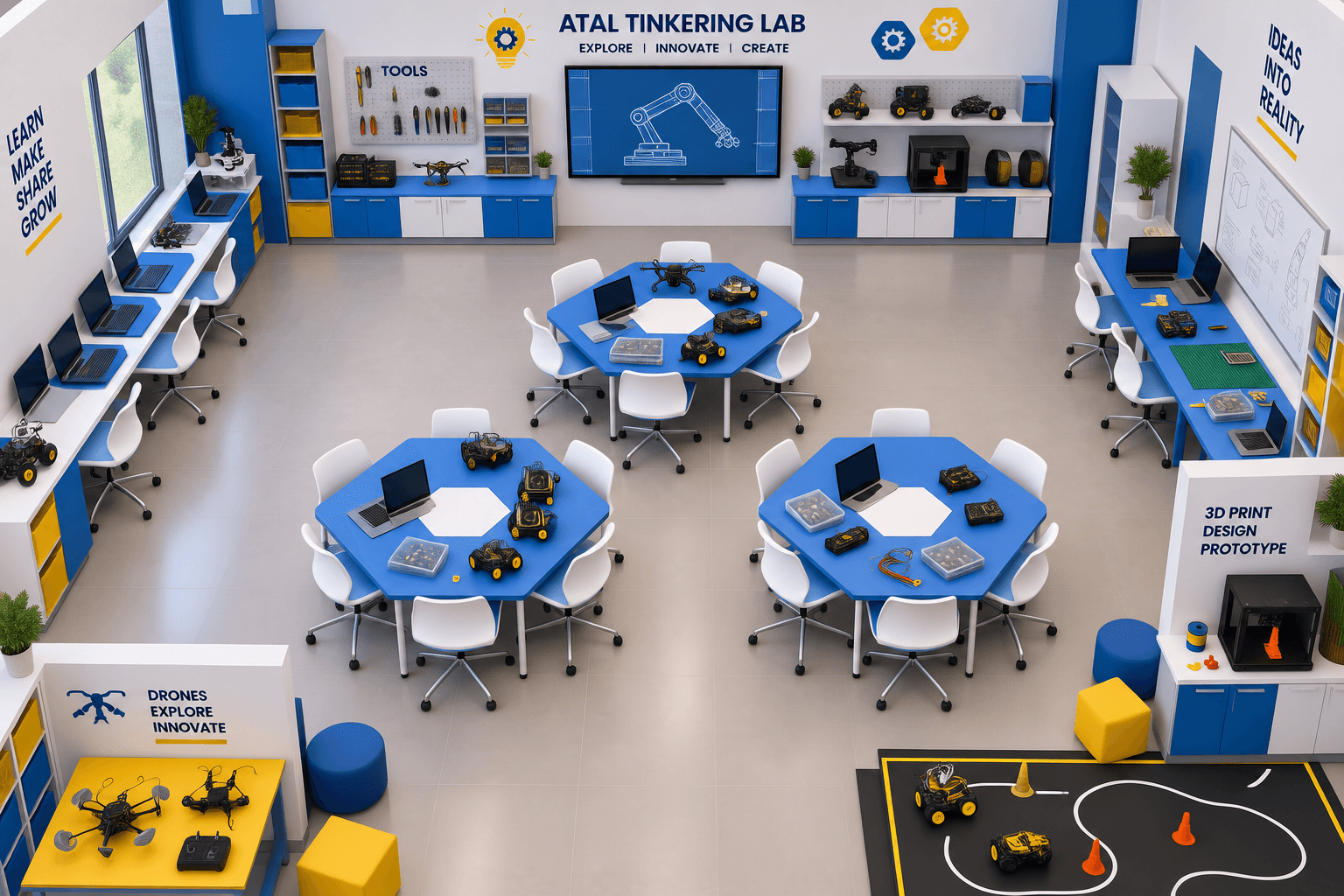
| Atal Tinkering Lab | Schools establishing or running an ATL | Tinkering and innovation activity aligned to the ATL model |
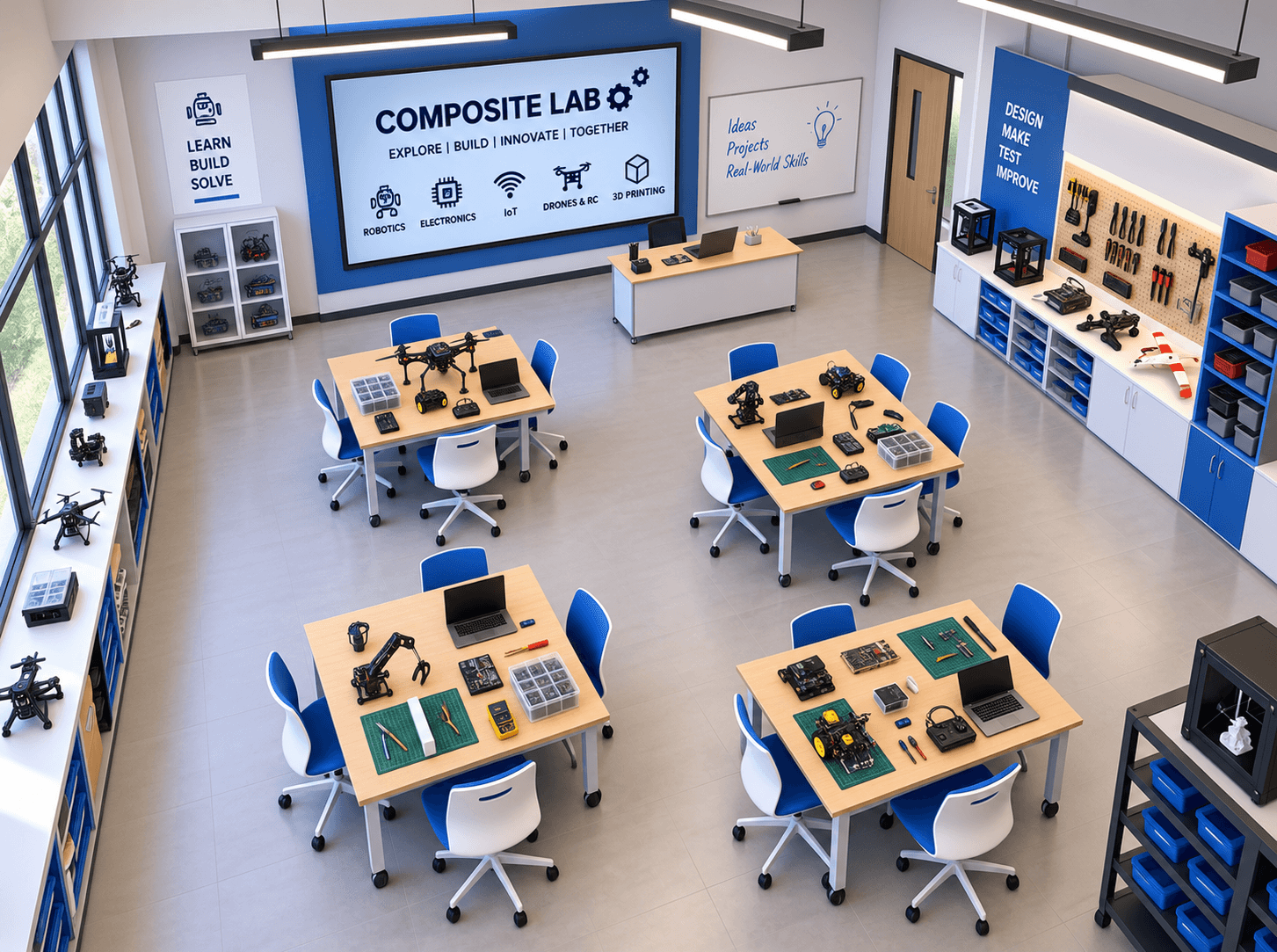
| Composite Skill Lab | Schools needing several skill areas in one shared room | Multiple skill domains combined in a single lab footprint |
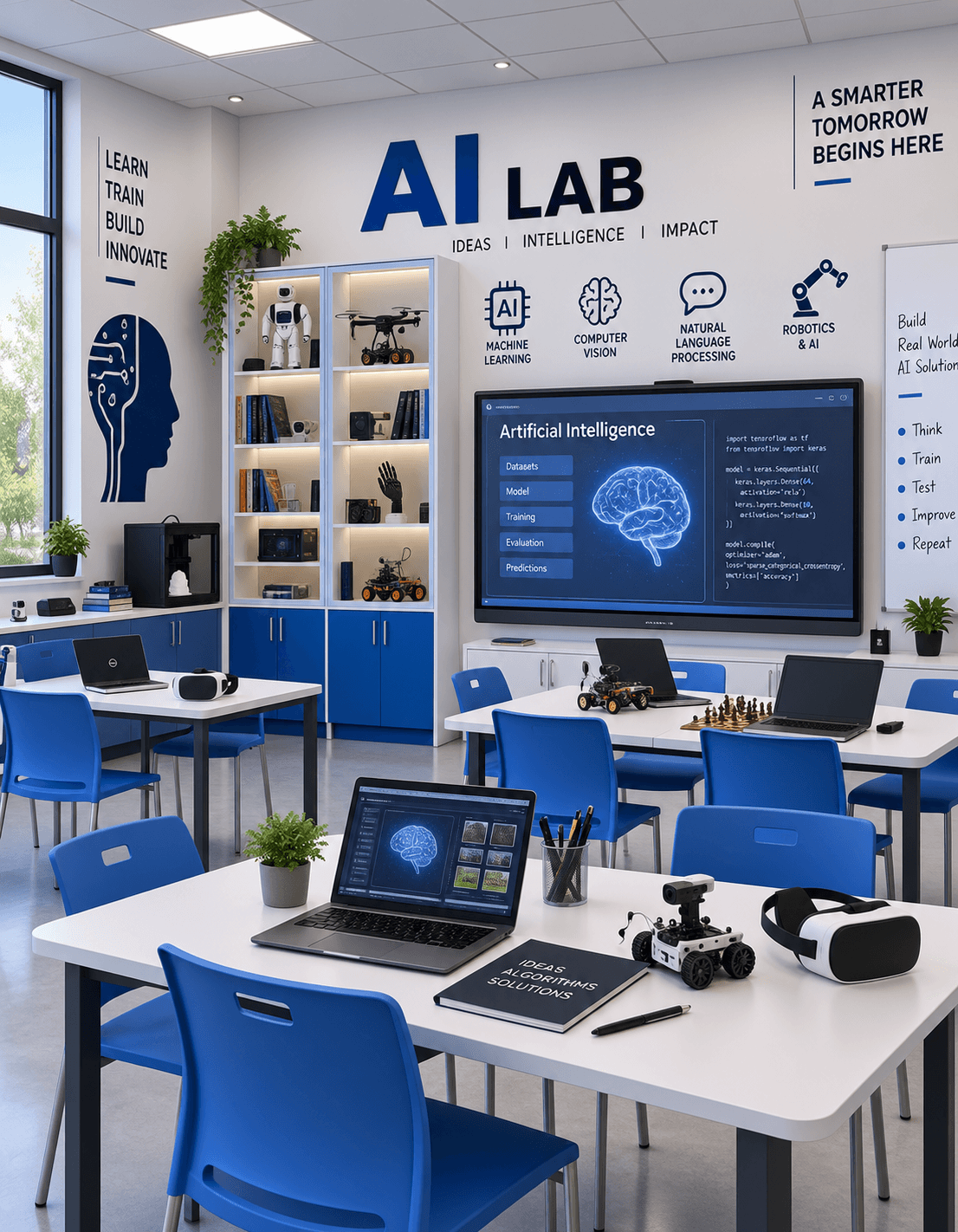
| AI Lab | Schools focusing specifically on artificial intelligence | AI concepts, data and model-building activity |
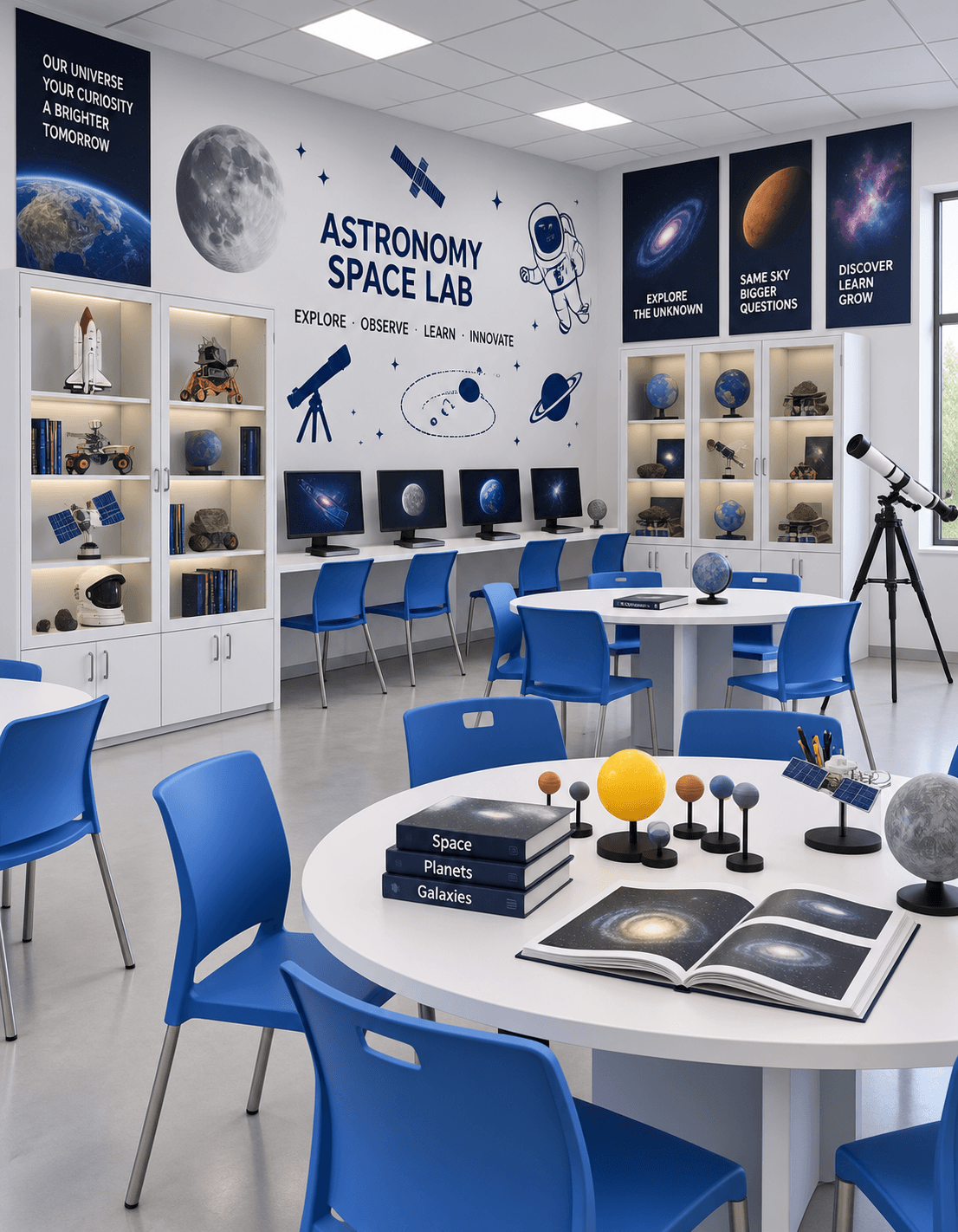
| Astronomy / Space Science Lab | Schools with an astronomy or space science interest | Observation and space science learning |
| AR / VR / MR Lab | Schools exploring immersive technology | Augmented, virtual and mixed reality experiences |
Use the table as an orientation, not a specification. The detail that matters — equipment, layout and curriculum depth — is set per school on the individual solution pages and in the proposal stage.
Space and infrastructure
Most schools can accommodate a lab in an existing classroom, but a few practical points are worth checking early, because they shape what is realistic:
- Room size and layout. Group work needs table space and circulation room, not rows of desks. The number of students working simultaneously matters more than total class size.
- Power and connectivity. Enough sockets, sensibly placed, and reliable internet where the programme depends on it.
- Storage and security. Kits, components and devices need somewhere safe between sessions — this is often underestimated.
- Light and seating. Astronomy and immersive setups have their own requirements that differ from a general-purpose lab.
Teaching capacity and training
A lab is only as useful as the teaching around it. Schools that sustain a programme past the first term usually have at least one teacher who feels confident running sessions independently. If that capacity does not exist yet, teacher training should be planned alongside the lab rather than after it — and it is worth being honest internally about how much time staff can realistically commit.
One lab, or several?
Starting with a single, well-used lab is generally more effective than spreading a budget thinly across several partially-equipped rooms. A common path is to establish one core environment, build teaching confidence and student interest around it, then extend into a more specialised space — astronomy or AR/VR/MR, for example — once the first lab is genuinely embedded in the timetable.
Schools running an Atal Tinkering Lab often take the opposite route, extending an existing facility rather than starting fresh. Either approach works; what matters is that each space has a clear purpose and someone responsible for it.
Budget and scope
Cost depends on scope — the number of students, equipment selected, room preparation, training and ongoing support all affect it, so there is no single figure that applies across schools. Final commercial terms are set in the proposal or quotation for your specific requirements. If it is useful, we can outline options at different levels of scope so you can see the trade-offs before committing.
Tell us the year groups you want to reach and the space you have available, and we can suggest which of the eight solutions fits — including saying so if a smaller starting point would serve you better.