
Botixbo

logo2
Find Us

H.No 576(O), B Colony, Behind Trimurti Honda, Gorakhpur

Opening Hours

Mon - Sat: 09:00 AM - 06:00 PM

The 8 Sensors That Run a Real Smart Home in 2026

The 8 Sensors That Run a Real Smart Home in 2026


Introduction: Why Most Smart Homes Fail

From 2015 to 2023 everyone bought smart bulbs and smart plugs. By 2026, most of those homes are "dumb" again. Why? Because they had controls, but no awareness. A real smart home doesn’t wait for you to tap an app. It senses and reacts. That’s where sensors come in. After testing 40+ sensors over the last 3 years, only 8 of them actually matter for 90% of homes. Everything else is a gimmick. Let’s break each one down: when it was invented, how it works, and why you need it in 2026.

1. Presence Detection


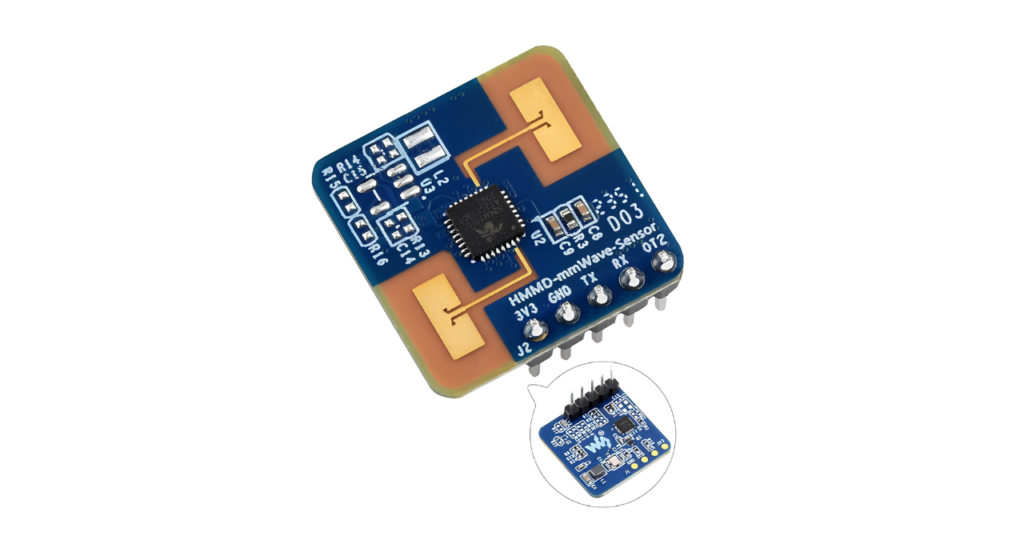
Presence Detection: mmWave Radar SensorInvented: Radar itself dates to 1930s. But low-cost 24GHz mmWave for consumer use arrived around 2019 with Infineon’s XENSIV chips. Modules like LD2410 hit AliExpress in 2022.

How it Works: Unlike PIR which detects movement of heat, mmWave sends out radio waves at 24GHz. When those waves bounce back, the Doppler shift tells the chip if something is moving. Newer chips like HLK-LD2450 can even do multi-target tracking and detect breathing/movement less than 1mm.Think of it like sonar, but with radio waves. It can go through wood, glass, and thin walls.

How to Use It: Connect LD2410 to ESP32 via UART. Use ESPHome. You get 3 zones: 0-2m, 2-4m, 4-6m. Code is 20 lines. Connect LD2410 to ESP32 via UART. Use ESPHome. You get 3 zones: 0-2m, 2-4m, 4-6m. Code is 20 lines.
4
4

Advantages:

1. No false “lights off”: Sitting still reading? PIR turns off. mmWave still sees your breathing.

2. Privacy: No camera. Good for bathrooms and bedrooms.

3. Through obstacles: Can detect presence in next room.

Disadvantages: Metal blocks it. Uses 0.3W vs 0.01W for PIR. Costs $4 vs $1.

Verdict: Replace every PIR in bedrooms, bathrooms, offices with mmWave in 2026.

BME280


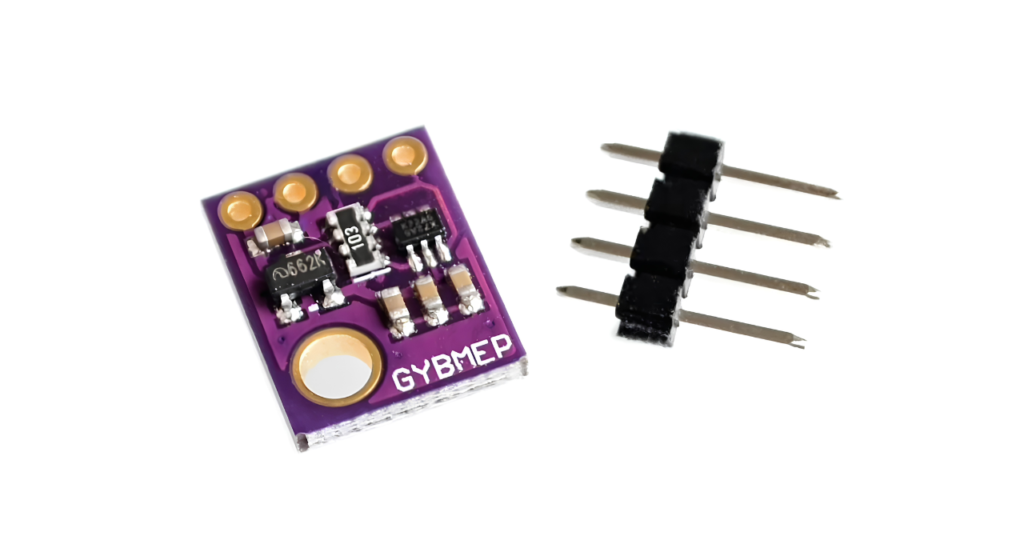
2. Temperature + Humidity: BME280


Invented: Bosch released BME280 in 2014 as the successor to BMP180. It added humidity.

How it Works: Inside the 2.5mm chip is a MEMS pressure membrane, a capacitive humidity sensor, and a band-gap temperature sensor. It measures all 3 and compensates them against each other in hardware.

How to Use It: I2C to ESP32/Raspberry Pi. Use Adafruit library. Sample once every 30 seconds to save power.

Advantages:

1. Accuracy: +/-0.5°C and +/-3% RH. DHT22 is +/-2°C.

2. No drift: DHT sensors drift after 1 year. BME280 is stable for 5+ years.

3. All-in-one: 1 sensor = 3 data points for HVAC automation.

Use Case: “If temp > 27C AND humidity > 70% AND presence detected → turn on dehumidifier + fan”

Cost: $3. The best $3 in your smart home.

 
Sensor


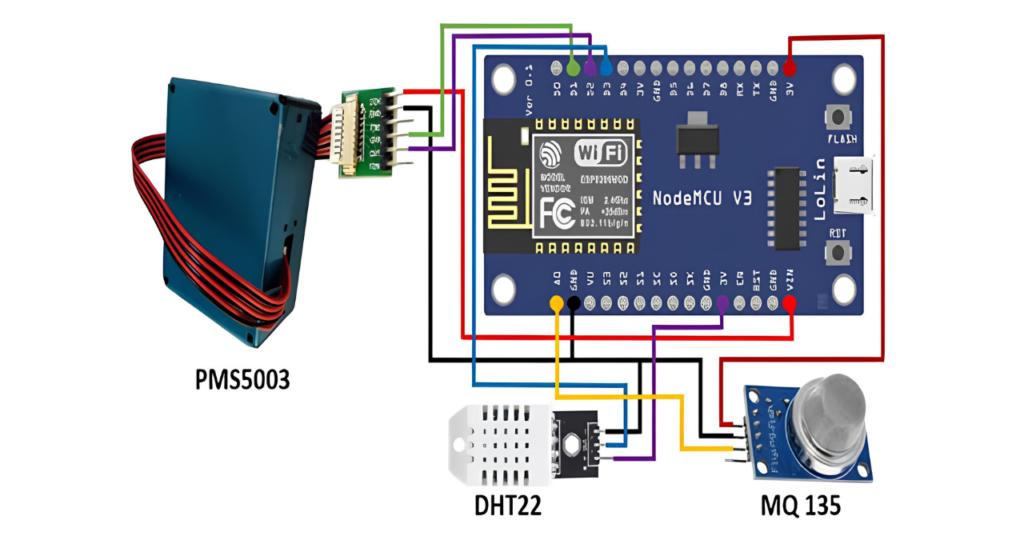
3. Air Quality: PMS5003 + MQ135


Invented: 

– PMS5003: Plantower, China, 2016. Cheap laser particle counter.

– MQ135: Figaro, Japan, 1990s. Metal oxide gas sensor.

How it Works:  

PMS5003: Shoots a laser through air. Particles scatter the light. Count the scatter = PM2.5 and PM10.  

MQ135: Heated metal oxide. Gas molecules change resistance. Measures CO2, NH3, Alcohol, Benzene.

How to Use It:  

PMS5003 = UART. MQ135 = Analog. Calibrate MQ135 in fresh air for 24 hours. Display on OLED + send to Home Assistant.

Advantages:

1. Health: WHO says PM2.5 is the #1 indoor pollutant. You can’t smell it.

2. Automation: “If AQI > 150 → turn on air purifier, close smart windows”

3. Cost: $15 total. Commercial monitors are $200.

Disadvantages: MQ135 needs recalibration every 6 months. PMS5003 fan dies after 2 years.

Verdict: If you live in Lucknow, Delhi, or any city with smog, this is sensor #1 to build

BH1750

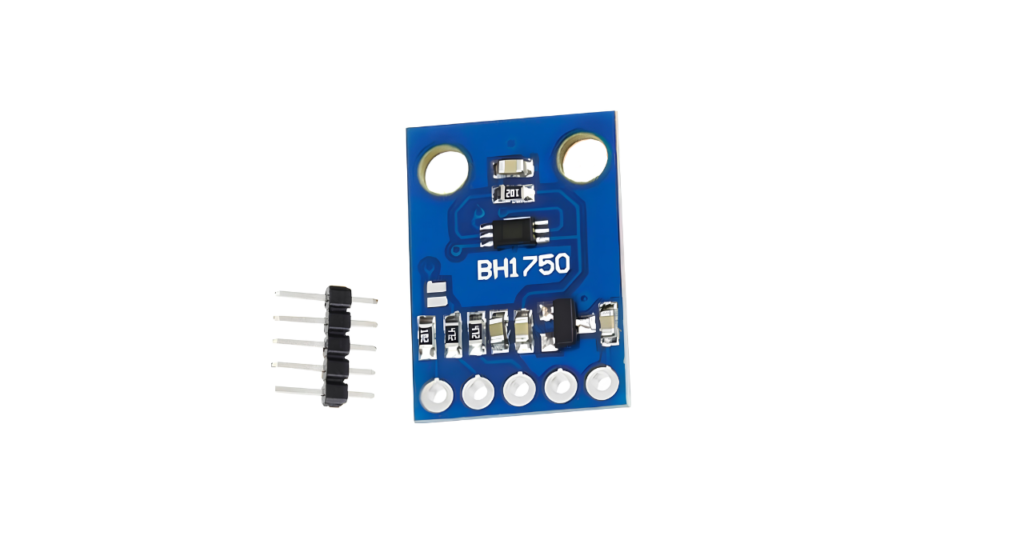
4. Light Sensor: BH1750


Invented: ROHM Semiconductor, 2010.

How it Works:  

Photodiode + 16-bit ADC. Measures light in “lux”. 1 lux = candlelight. 10000 lux = daylight.

Advantages:

1. Human-centric lighting: “If lux < 100 AND presence → turn on lights to 400 lux”

2. Saves energy: Don’t turn on lights at 3pm when sun is enough

3. Digital: No ADC needed. I2C only.


Cost: $1.5. Why anyone still uses LDR + resistor is beyond me.

5. Door/Window: Magnetic Reed Switch

Invented: 1930s by W.B. Ellwood at Bell Labs.

How it Works:
2 magnets. When together = circuit closed. When door opens = circuit open. That’s it. No power needed.

Advantages:
1. 10 year battery: Uses 0 power
2. $0.30: Cheapest reliable sensor
3. 100% reliable: No software, no drift

Use Case: Security, HVAC: “If window open > 2 min → turn off AC”

6. Water Leak: Capacitive Sensor

Invented: Capacitive sensing 1970s. Water leak version popularized 2018.

How it Works:
2 traces on PCB. Water changes capacitance between them. No corrosion because it doesn’t use DC current like old probe sensors.

Advantages: Put under sink, washing machine, bathroom. Send Telegram alert in 2 seconds. Can save $2000 in damage.

7. Motion for Safety:

Ultrasonic HC-SR04 for Fall Detection
Invented: Ultrasonic ranging 1940s. HC-SR04 module 2009.

How it Works:
Sends 40kHz sound pulse. Measures time to echo. Distance = time * 343m/s / 2.

Advantages for Smart Home:
Privacy alternative to cameras for elderly care. Mount on ceiling. “If distance suddenly increases by >1m → possible fall → alert”.

Cost: $1.5

8. Gas: MQ2 / MQ5

Invented: Figaro, 1990s.

How it Works: Same as MQ135 but tuned for LPG, Propane, Smoke.

Advantages:
Non-negotiable for kitchens with gas stove. Add buzzer + relay to shut gas solenoid.

Important: Must have 24hr burn-in and needs fresh air calibration.

Conclusion: The 2026 Smart Home Stack
Don’t buy 20 sensors. Buy these 8:
Priority Sensor Cost Why
1 mmWave LD2410 $4 Presence
2 BME280 $3 Climate
3 PMS5003 $12 Health
4 Reed Switch $0.3 Security
5 BH1750 $1.5 Lighting
6 Water Leak $2 Damage prevention
7 MQ2 $2 Safety
8 HC-SR04 $1.5 Safety/Follow
Total: <$30 and you have a home that actually thinks.

Next chapter we’ll do wiring diagrams and Home Assistant YAML for all 8.

The 8 Sensors That Run a Real Smart Home in 2026

The 8 Sensors That Run a Real Smart Home in 2026

The 8 Sensors That Run a Real Smart Home in…

From Curiosity to Creation: How Botixbo Shapes Young Tech Minds

From Curiosity to Creation: How Botixbo Shapes Young Tech Minds

How Botixbo Shapes Young Tech Minds Introduction Every great invention…

Robotics and AI Lab Setup in School

Robotics and AI Lab Setup in School

A Future-Ready Learning Environment What is a Robotics & AI…